












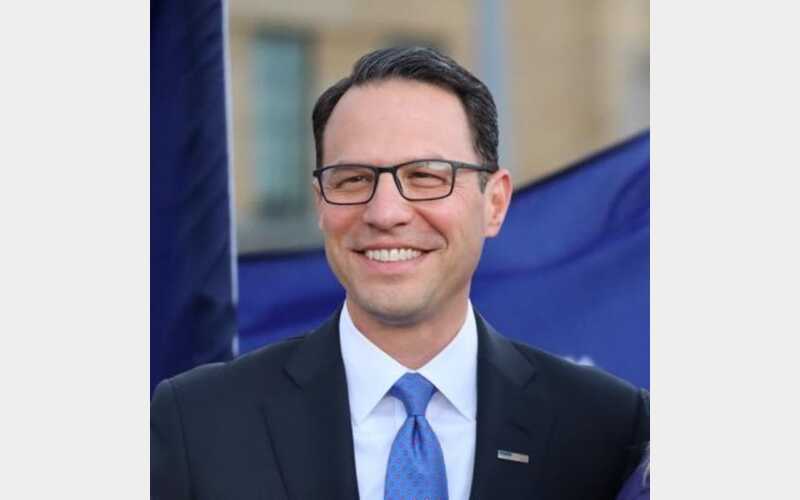
Pennsylvania Gov. Josh Shapiro signed the 2026-27 state budget on Sunday.
The $50.8 billion dollar spending plan was negotiated by the Pennsylvania House and Senate, which both passed the budget with bipartisan support.
The budget passed by Senate by a 44-6 margin, while the House approved by plan by a 167-35 count.
According to State Reps. Tina Pickett and Clint Owlett, the plan avoids new taxes and keeps the state’s rainy day fund intact.
Pickett (R-Bradford/Wyoming) and Owlett (R-Tioga/Bradford) issued the following statement in support of House passage of the 2026-27 state budget:
“The budget we were presented with and passed yesterday resolved critical concerns we had when the governor introduced his proposal in February. This budget brought spending down to $50.8 billion while avoiding new taxes for Pennsylvanians and leaving the state’s Rainy Day Fund intact. However, this was certainly not a budget we would have written ourselves and demonstrates how compromise serves an imperative role in the budgeting process.
“We were impressed with how educational spending was handled this year, with schools again sharing $100 million for facility improvement projects. A $10 million investment in career and technical schools and retaining the Educational Improvement Tax Credit program demonstrates the Commonwealth’s dedication to school choice – supporting our children and the next generation of Pennsylvanians.
“The proposal also sets aside $775 million for rapid deployment projects for our roads and bridges, serving as the final piece our communities need to repair rural roads and bridges across the Commonwealth.
“As important as what is in the budget are the items that were dropped from the governor’s original plan, including the legalization of recreational marijuana and an exorbitant tax on skill games which are vital to supporting clubs and small businesses in our communities.
“Of course, there are things we would have liked to have seen included in the budget agreement, such as support for our emergency services departments that are struggling to continue their life-saving mission, and the permitting changes we need to empower our communities to protect themselves against extreme flooding as we just experienced last week. We will continue to advocate for these initiatives until they come to fruition.
“No budget is perfect, and what we’re seeing this year is no exception. Although we were able to bring spending significantly down from the original proposal, it is still beyond what we would like to see for Pennsylvania. We are pleased to have a budget in place but are committed to continuing our work to grow our economy, increase revenues and expand opportunities for the people of the Northern Tier.”
Sen. Gene Yaw (R-23), chairman of the Senate Environmental Resources and Energy Committee, highlighted several major energy policy initiatives included in the passage of the 2026-27 state budget, saying the measures will strengthen Pennsylvania’s position as an energy leader while supporting long-term economic growth and electric grid reliability.
“Affordable, reliable energy is the foundation of Pennsylvania’s economy,” Yaw said. “Every manufacturer, small business, hospital, school and household depends on it, and our ability to attract new investment hinges on having abundant, dependable power. By including these measures in this year’s budget, we’re improving planning for future energy needs, supporting responsible natural gas development and protecting taxpayers and property owners for years to come.”
The broader budget agreement included passage of Yaw’s bill establishing decommissioning and financial accountability requirements for solar generation projects. The measure, which is supported by the Pennsylvania Farm Bureau and several solar associations, provides uniformity and certainty statewide and ensures landowners won’t bear the burden of dismantling solar facilities once they cease operation.
Among the provisions included in the state’s Fiscal Code is legislation originally sponsored by Yaw requiring PJM Interconnection, the regional grid operator, to share electricity demand forecasting information with Pennsylvania utilities. The additional transparency, Yaw said, will help state agencies better understand future electricity needs as demand continues to increase.
The Fiscal Code also includes Yaw’s legislation updating Pennsylvania’s Oil and Gas Conservation Law to match today’s drilling practices and speed up permit reviews for Utica wells. By bringing the law in line with current practices, the bill will help reduce delays in permit reviews, improve well placement and limit unnecessary surface impacts.
Also included is Yaw’s plan to address longstanding challenges by defining what constitutes a reasonable effort to reach the attainable bottom of a well, eliminating ambiguity that has led to costly delays and inconsistent interpretations. This clarity will help Pennsylvania fully leverage nearly $400 million in federal funding dedicated to addressing legacy oil and gas wells, ensuring these resources are used effectively to plug more wells in less time.
Collectively, Yaw said, the initiatives modernize key areas of Pennsylvania’s energy policy while addressing longstanding regulatory challenges and ensuring greater accountability across the energy sector.